Separate search ranking from citation readiness without abandoning SEO.
GEO Is the New Ranking: What AI Engines Actually Cite
Generative Engine Optimization (GEO) adds a citation layer to search strategy. This keynote helps marketing leaders choose where to focus first: entity clarity, evidence, structure, or distribution, while keeping established SEO foundations in place.
Funded, not free. Semrush funds Fernando's research and stage time, so there is no fee to the event. Engagements are selected on audience fit rather than budget. Travel and logistics are discussed once an event is confirmed.
Business decisionChoose which visibility layer to rebuild first
Audience outcomeA framework for choosing a 90-day citation-readiness priority
Research baseThe original GEO study by Aggarwal et al.
AdaptationExamples matched to the room's market and maturity
What changes after the session
Diagnose gaps across entity, evidence, structure, and distribution.
Choose one 90-day priority that the team can defend.
A framework the room can use
Valuable for
B2B CMOs, VPs of Marketing, content leaders, and senior search teams.
Framework
Entity, evidence, structure, and distribution.
Use this after the keynote to
audit the weakest layer and choose the first 90-day priority.
The room leaves with
A shared prioritization model and a defensible reason for rebuilding one layer first.
Three decisions, shown clearly
Three illustrative slides showing the visual direction for this keynote. The final deck is developed and adapted to your event.
How the argument develops
- Define the changed unit of visibility.
- Inspect the controlled study and its limits.
- Apply a four-layer diagnostic to one business priority.
Research foundation
GEO: Generative Engine Optimization
Scope: GEO-Bench, roughly 10,000 queries, controlled generative-engine evaluation. The evaluation is not market-specific; a commercial market and observation time window do not apply. The paper was submitted in 2023.
Evidence boundary: This is a source-visibility result, not a universal citation, traffic, or current-platform lift. Aggarwal et al. introduced GEO. Fernando did not coin the term.
Source
Review the original study and its methodology to assess how the findings apply to your audience.
Read the primary sourceWho this keynote is for
A good fit for
Marketing leaders deciding how their SEO and content teams should respond to AI-generated answers.
What it does not cover
A technical implementation workshop. The session does not promise rankings, citations, or traffic.
Research built for a live room
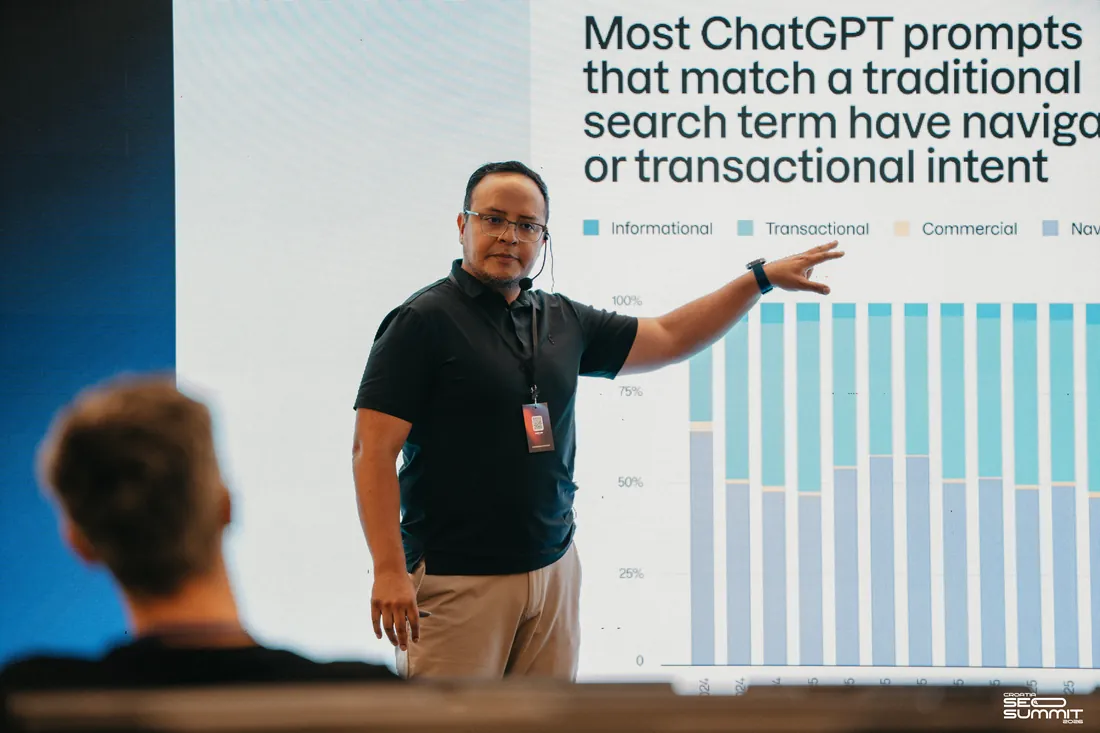
Speaker
View speaker profileFernando Angulo
I research how people, and increasingly AI systems, discover, evaluate, and choose brands, then turn that evidence into decisions marketing leaders can defend.
Senior Market Research Manager at Semrush, an Adobe company
Organizer resources
No email is required. The PDF is approximately 2.0 MB and includes approved bios, keynote topics, audience fit, formats and languages, selected appearances, contact details, and press-photo access.
Questions before you shortlist the talk
Does this keynote replace an SEO session?
No. It shows how citation readiness extends established SEO foundations and helps leaders decide where additional work belongs.
How is the session adapted for an event?
The decision, examples, audience seniority, market context, and evidence boundaries are reviewed before delivery. The core research claims remain sourced.
Compare the next decision
Help your audience choose its first GEO priority.
Share your audience, event date, and the decision you want the session to help them make.
Invite me to speak