Fernando Angulo, Senior Market Research Manager at Semrush, an Adobe company
One favorable ChatGPT answer does not establish a stable association between your brand and a topic. A marketing decision needs evidence across the questions a buyer asks when defining a problem, comparing options and choosing a solution.
The useful unit is a commercial decision, with distinct questions and evidence someone can inspect. A screenshot records one observation. An investment decision needs a diagnostic that also retains missing mentions, factual errors and answers that contradict the first impression.
My proposed Brand-Topic Association Map defines the decision, covers five intents and records mention, recommendation, citation, prominence and accuracy separately. Its practical output is a clear choice about what the team should improve.
A topic starts with a buyer decision
“AI search” is too broad to direct an intervention. It can include a marketing executive evaluating a strategy, an agency preparing a report and a conference programmer selecting a keynote. Each buyer needs different evidence.
Define the topic as buyer + decision + offer + constraints. For example: B2B conference programmers choosing a research-led AI search keynote for senior marketing audiences in the United States or Europe. This example defines a diagnostic boundary; it is not measured demand.
Buyer and audience can be different people. The programmer needs evidence of fit, availability and experience. The audience needs to understand the shift and leave with a decision it can use. Content should support both, with proof appropriate to each role.
Check existing destinations before adding pages. A new wording of the same question does not justify another article. A material change in buyer, offer or selection criteria can justify a different destination.
Five intents help locate the gap
The Semrush topic authority study, published July 20, 2026, observed 1,094 US categories in ChatGPT from January through June 2026, with five prompts per category. Its findings are observational and limited to that sample. Source data: © Semrush.
For a local diagnostic, use five intents as a coverage guide. They are not every possible wording or a statistically representative market sample.
| Intent | Proposed question | Evidence the buyer needs |
|---|---|---|
| Define | What should an AI search keynote deliver for a leadership team? | Specific scope and audience takeaways |
| Compare | How should I choose between a strategic session and a technical workshop? | Differences in format, depth and application |
| Alternatives | Which speakers fit a B2B conference on AI search? | Candidates and verifiable experience |
| Use case | Which profile fits a CMO audience in Europe? | Relevant experience and session examples |
| Choose | What should I check before inviting a speaker? | Proof, conditions and a contact route |
These are editorial proposals, not observed queries. Review them against actual buyer language before freezing the panel. Keep discovery questions unbranded and use a separate diagnostic for questions about your identity.
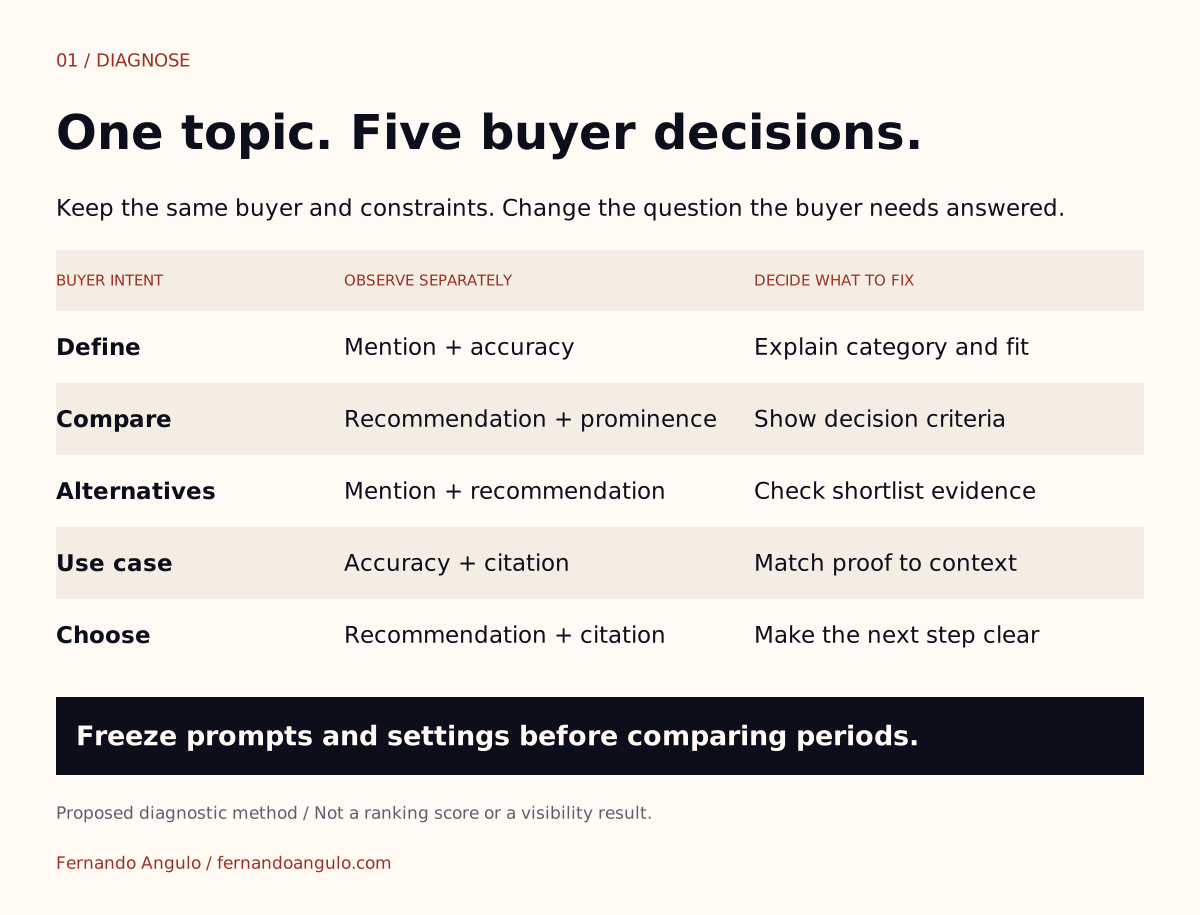
Created in Figma for this article. Highlighted pairings identify useful signals by intent; record all five signals for every response. The graphic contains no measured visibility results.
The five signals answer different questions
A mention records whether the answer names the brand. An incidental or negative appearance still needs context. A recommendation requires the answer to present the entity as a suitable option for the specific decision.
A citation records a visible reference and its exact URL. Your website can appear as a source without the answer naming or recommending your brand. Prominence describes the entity’s position under a rule set before collection, such as its place in an ordered shortlist.
Accuracy checks the facts the answer attempts to state. Define material facts first: expertise, affiliation, offer conditions or booking route. A fluent answer can contain an error that changes the buyer’s choice.
Calculate mention and recommendation rates over valid responses. For accuracy, retain the number of facts reviewed and errors found. If you report position among mentions, also report responses without a mention. A favorable average can conceal those absences.
A fixed protocol makes comparisons interpretable
Keep the exact question, platform, visible model, mode, retrieval setting, market, language, date and repetition count. Use fresh sessions under consistent rules and archive the answer and visible sources. Version the panel before inspecting results.
A failed run is not a brand absence. A valid answer without the brand is an observation. A question that has not been run remains “not collected.” These distinctions determine the denominator and what the team can conclude.
Repeat questions to observe variability while retaining comparable repetition counts. Repetitions are not independent buyers. Record product, mode or wording changes and limit historical comparisons accordingly.
The diagnostic should select an intervention
When a material buyer question lacks a useful answer, review content: selection criteria, conditions, examples and proof. When the entity appears with incorrect facts, review identity clarity and the sources supporting that description. The observed failure determines where the work belongs.
If the content exists, inspect whether cited sources include it and whether it answers the intent. Where your site and employer dominate the evidence, distinguish them from external corroboration. Classify brand-controlled, affiliated, host or partner, editorially independent, commercial-directory and unrelated sources.
An affiliated source can provide valuable evidence. Its editorial control remains different from independent reporting. Retain both properties: what the source substantiates and who controls it.
As a hypothetical example, a software company could appear in definition questions and disappear in supplier comparisons. The next step would be to check its evaluation criteria and case-specific proof. Then decide whether to improve a page, clarify the entity or distribute existing evidence.
A review needs an owner and a decision rule
Prepare a decision record with the commercial topic, gaps by intent, cited sources and material errors. Choose one primary intervention, one owner, a review date and the rule for the next round. This turns observation into work the team can complete.
If the panel lacks enough comparable responses, finish collection before reporting a trend. If signals are stable and no material buyer gap exists, preserving the current content can be the right choice.
Topical Gravity is used here as an editorial framework connecting questions, evidence and decisions. It is not an official platform score. Movement after publication remains observational; attributing it to an article requires a design that addresses alternative explanations.
Frequently asked questions
How many questions should I start with?
Start with five distinct intents around one commercial decision. Add questions when a material buyer need is missing, and record a new panel version before comparing results.
Can prompts include my brand?
Yes, for identity and accuracy checks. Keep those checks separate from unbranded discovery because naming an entity changes the task.
Does a citation mean ChatGPT recommends my brand?
A citation records a visible source. A recommendation requires the answer to present the entity as a suitable option; review both signals separately.
How should failed runs be handled?
Retain them as failed and explain the cause when known. Exclude them from the valid-response denominator and report the missing executions.
Should I publish more articles to improve association?
Locate the gap first. Improving an existing page, correcting identity facts or securing relevant external evidence may be sufficient.
How can I assess whether a change helped?
Repeat the panel under comparable conditions and inspect signals, sources and errors. Report observed movement and retain documented commercial outcomes separately.
If your team or conference audience needs to translate this diagnostic into marketing decisions, invite me to deliver the Topic Ownership keynote.
 FA
FA