Three signals change the first call
The studies below measure different populations and behaviors. Read them as bounded signals, not one combined prevalence estimate.
Sources: 6sense Buyer Experience Report 2025 and Gartner’s B2B buyer survey. Neither study establishes that all B2B buyers arrive at a sales call pre-educated by AI.
A model for AI-shaped discovery
This is an operating model, not a universal measured funnel.
- AI briefing before contact
Selected AI systems synthesize available sources into an answer that may shape the buyer’s working view. - Human validation on the first call
The seller tests assumptions, corrects material errors, and adds situational context. - Upstream GEO correction
Marketing improves the public evidence available to AI systems through generative engine optimization (GEO). - Recurring measurement
The team repeats the controlled prompt panel and records answer and citation changes.
Discovery versus validation
| Decision point | Old discovery call | AI-shaped validation call |
|---|---|---|
| Starting point | Assume the buyer needs category education. | Ask what the buyer already believes. |
| Opening question | What brings you here? | What have you already learned, and what remains uncertain? |
| Seller’s job | Present the standard narrative. | Confirm, correct, and add situational context. |
| Evidence | Deck and product claims. | Approved sources tied to the buyer’s assumptions. |
| Failure mode | Repeat information the buyer already has. | Treat a variable AI answer as a buyer transcript. |
| Useful output | Completed qualification fields. | A validated decision brief and named evidence gaps. |
Platform outputs are not interchangeable
Forrester’s public 2025 survey summary says twice as many buyers named generative AI or conversational search as a more meaningful or important information source than any other source. The public page does not provide percentages or sample details, so this signal should not be turned into a scaled chart.
Semrush’s public 2026 AI Visibility Index release and registered methodology describe more than 126 million curated, deduplicated US prompts across ChatGPT, Google AI Mode, Google AI Overviews, and Gemini, covering 22 industries from January through April 2026. Citation counts describe that study period. They do not measure answer quality, buyer behavior, or a permanent platform property.
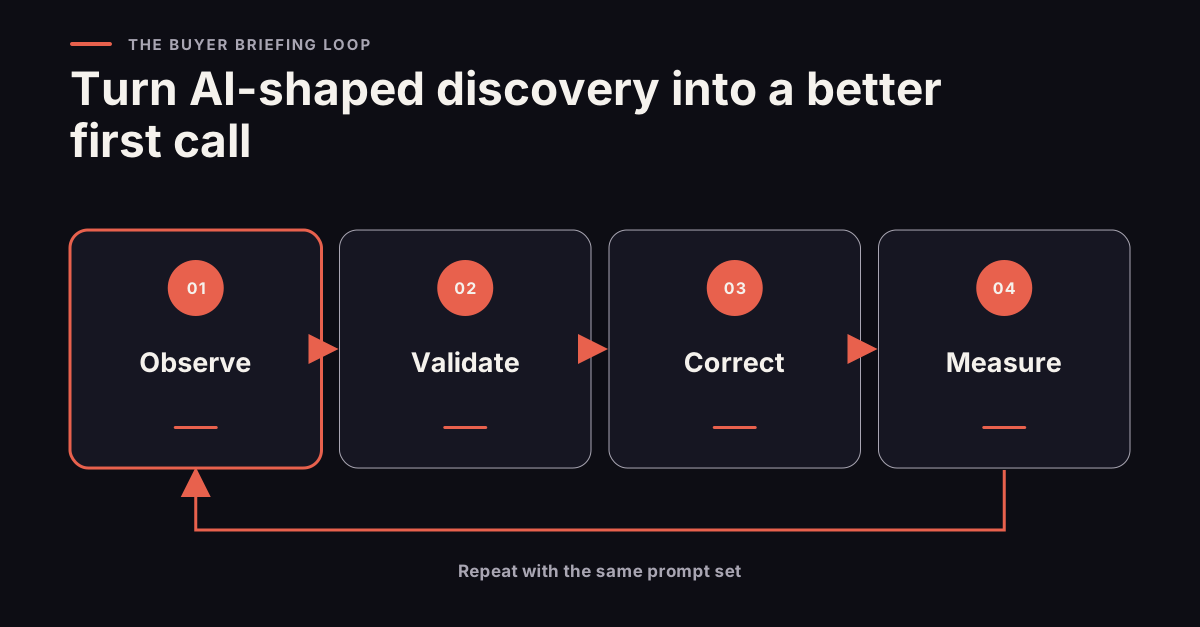
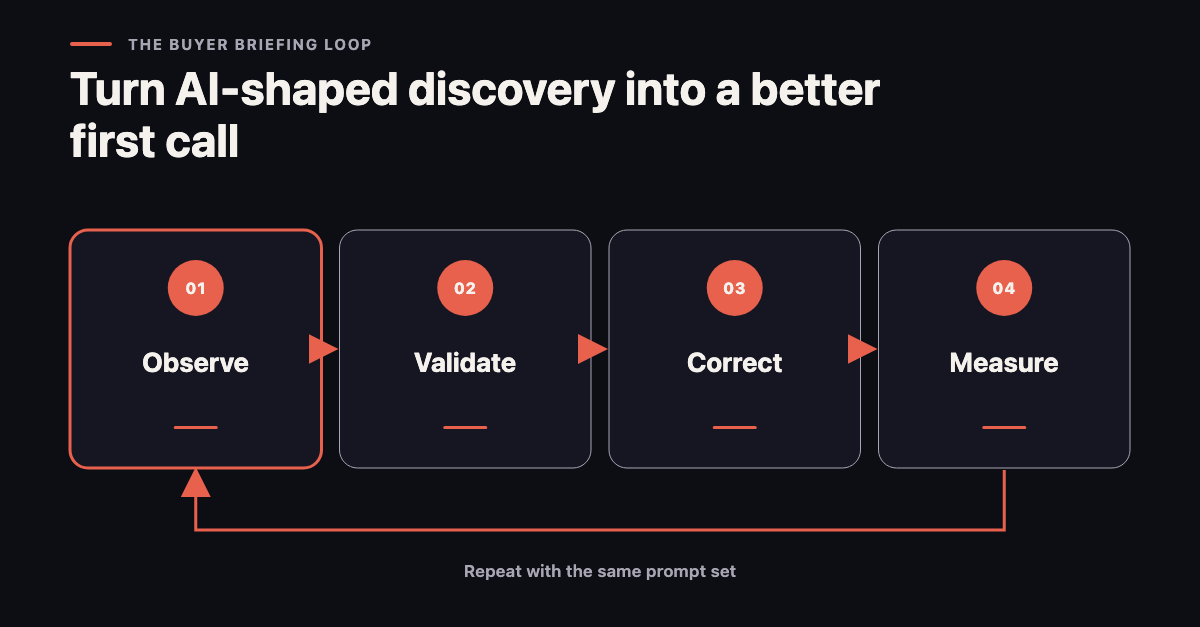
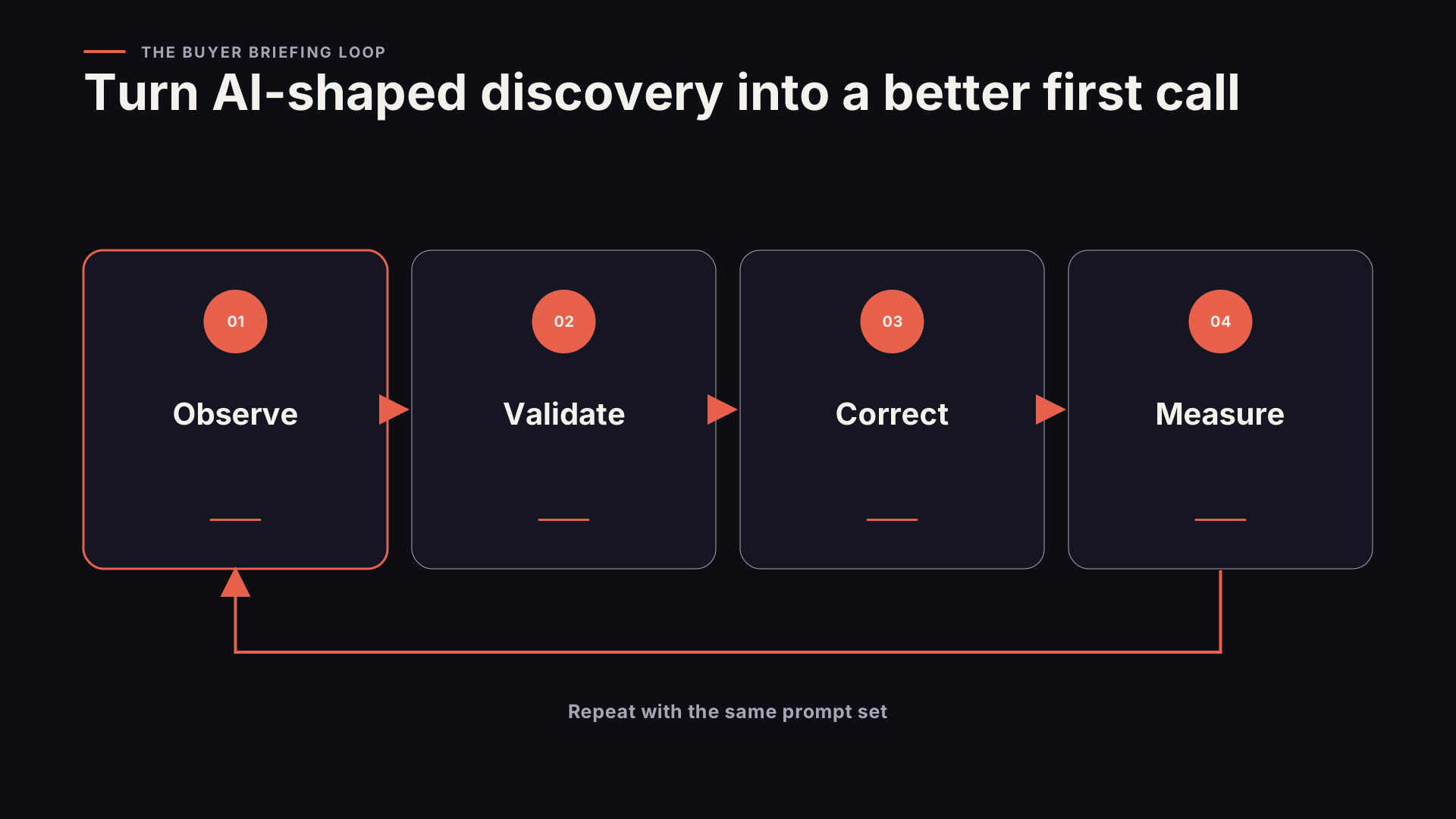
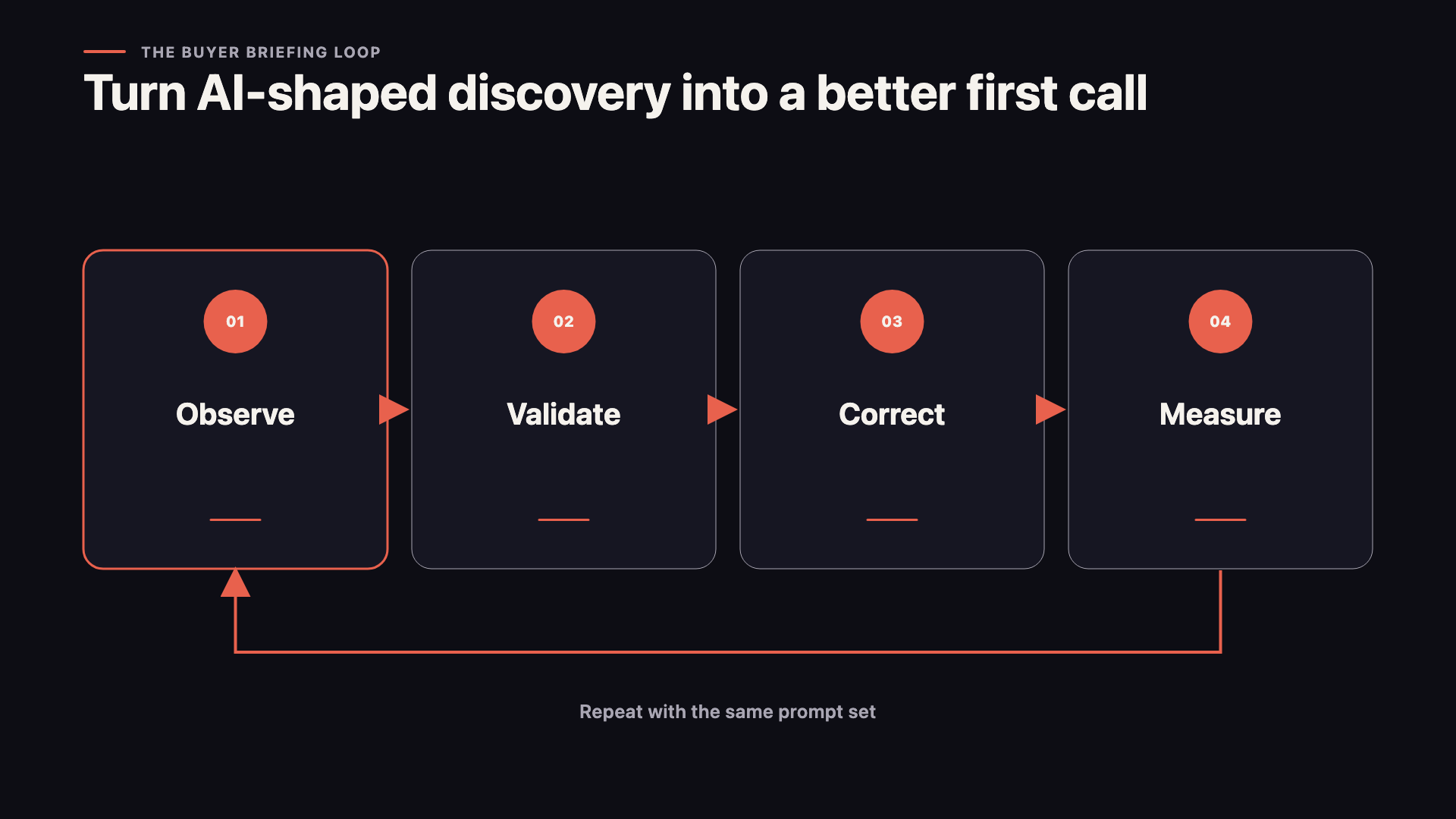
The Buyer Briefing Loop
This is my proposed operating framework, not an industry standard or an employer framework.
- 1
Observe
Record what selected AI systems say for a controlled, dated prompt set.
- 2
Validate
Compare the answers with approved evidence and known boundaries.
- 3
Correct
Improve public source content and seller guidance where the gap matters.
- 4
Measure
Repeat the same prompts and track answer and citation changes.
An AI battlecard for the first call
Illustrative example: this is a fictional B2B software scenario. No live platform observation exists.
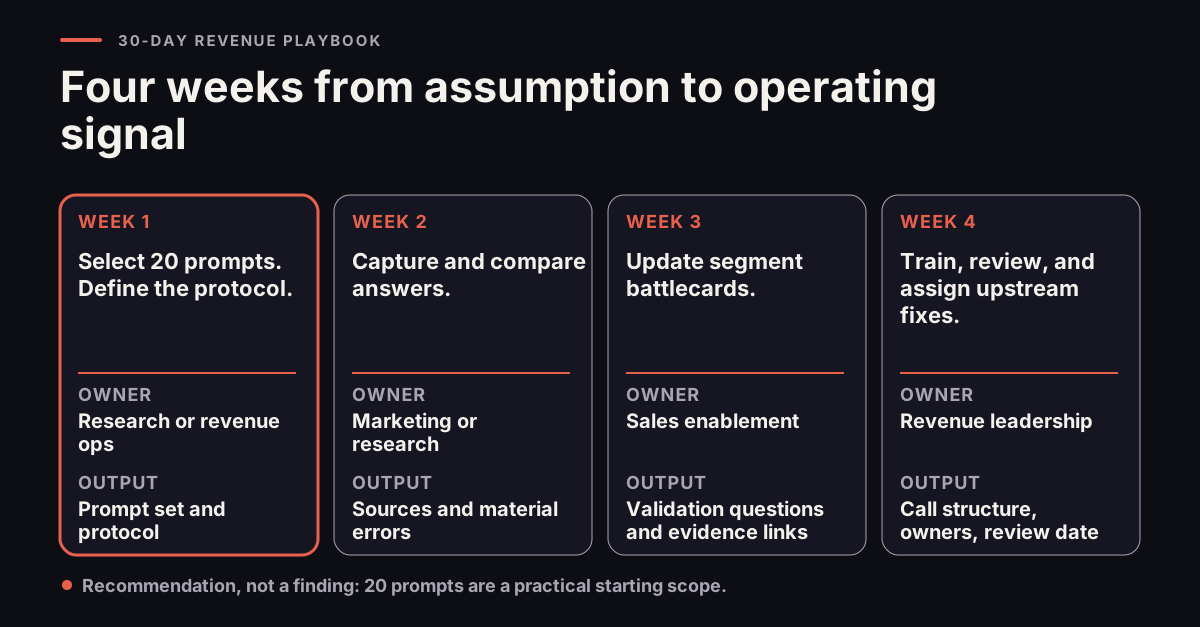
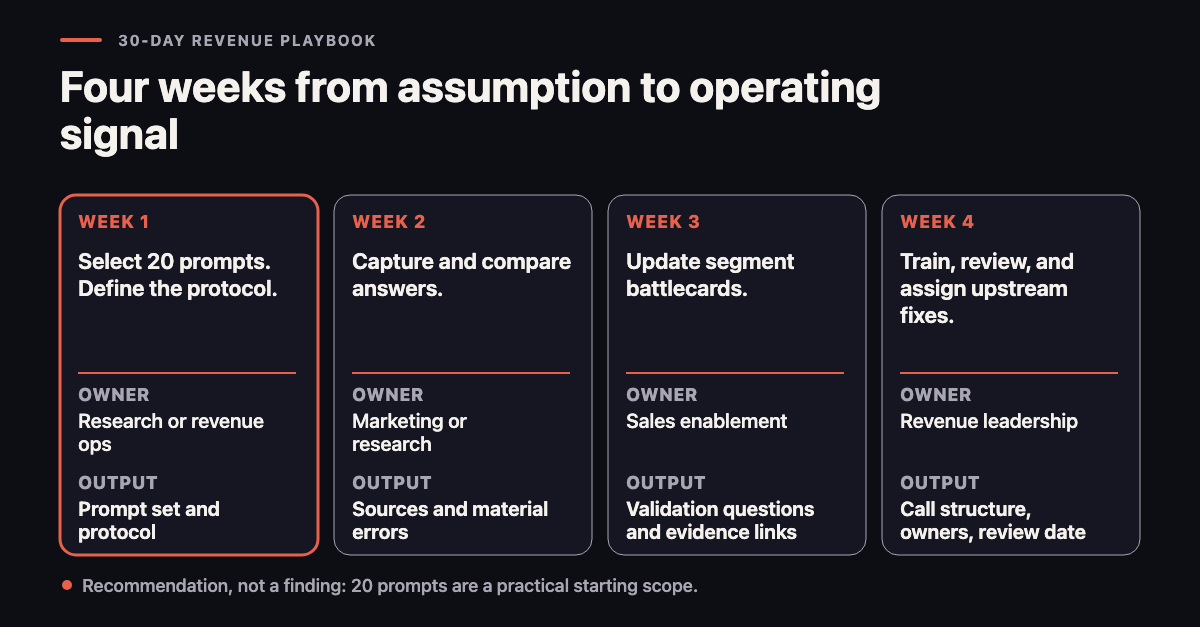
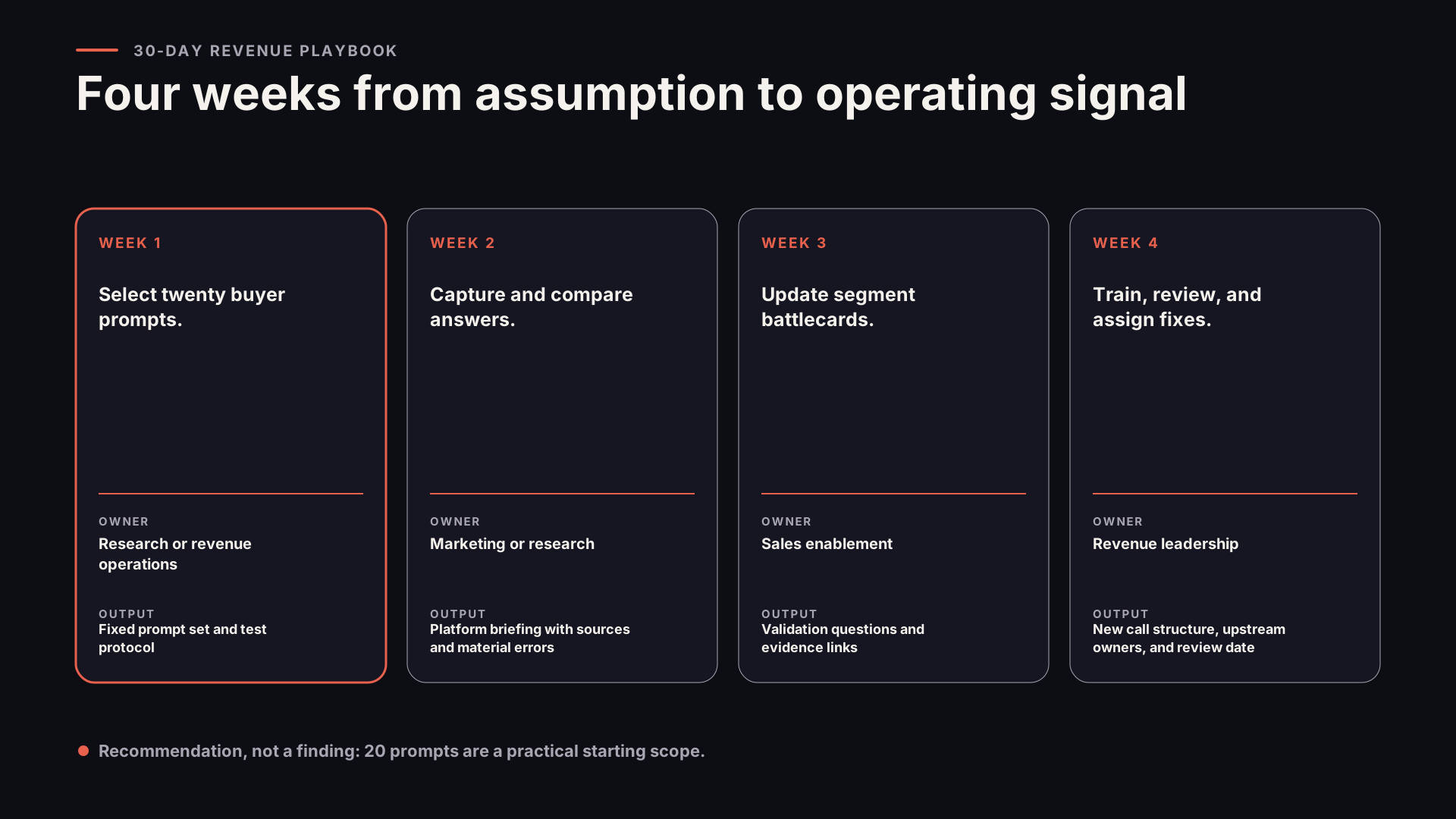
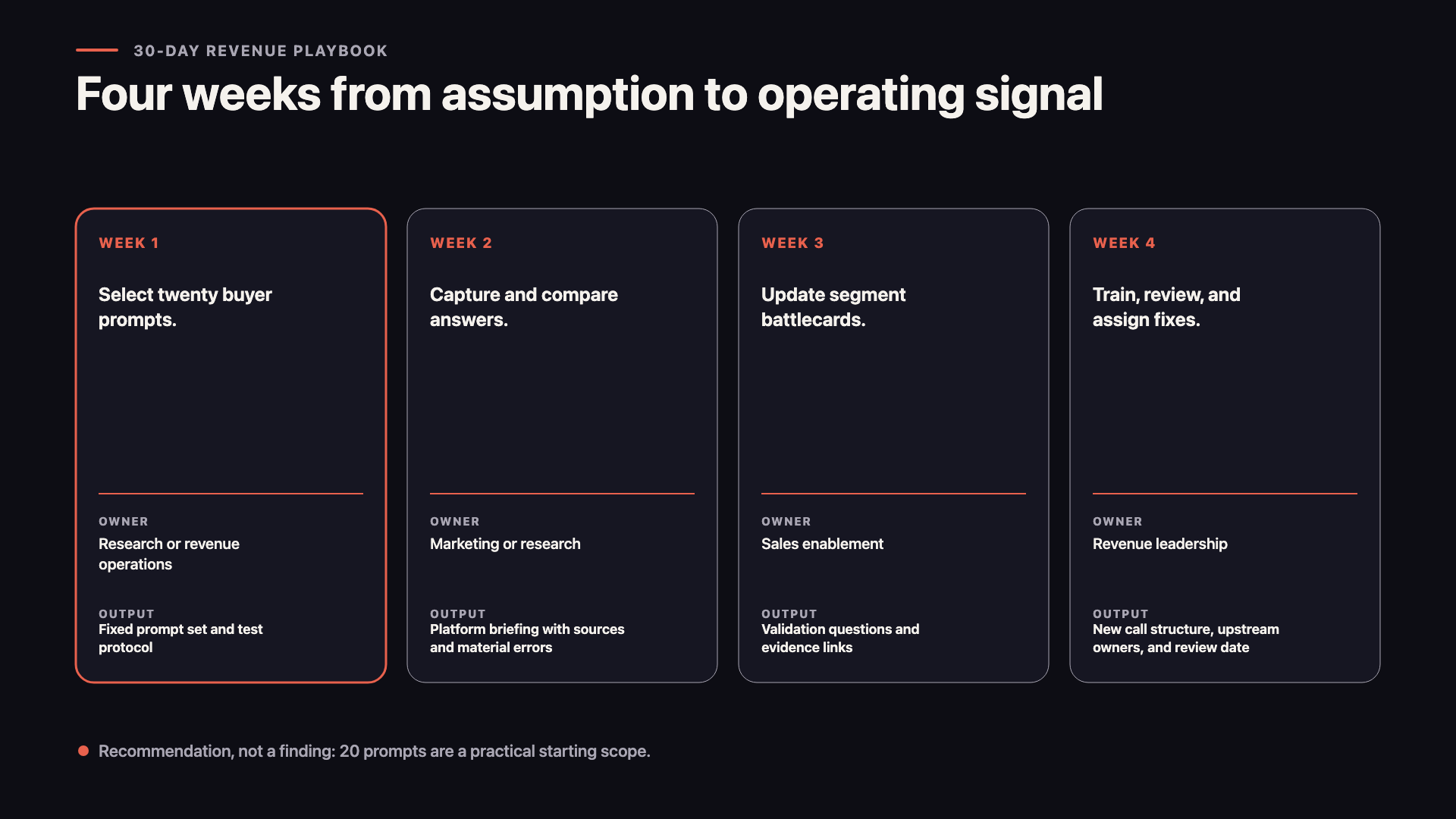
A 30-day operating plan
Twenty prompts are a practical starting scope, not a research standard.
Key takeaways
- AI shapes some buyer preparation, but the evidence does not support a universal or majority-scale claim.
- A fixed prompt panel is a dated monitoring sample, not a transcript of an individual buyer’s research.
- The first-call opportunity is to validate assumptions, correct material errors, and add situational context.
- Track mentions and citations as visibility diagnostics. Do not call them pipeline leading indicators without a defined validation study.
FAQ
Do all B2B buyers arrive pre-educated by AI?
No. Public studies measure different buyer populations and different forms of AI use. They show that AI can shape buyer preparation, but they do not establish that every buyer, most buyers, or a representative majority arrives at a sales call pre-educated by AI.
How do I find out what AI tells my buyers?
Run a fixed, dated panel of buyer-relevant prompts on selected platforms. Record the setup and repeat the runs. The result is a monitoring sample, not a transcript of any individual buyer's research.
Is the sales rep role disappearing?
No. Gartner reports that 69% of surveyed B2B buyers preferred to validate AI-generated insights with a sales rep. That supports a first call built around testing, context, and correction, while sales still performs other information and decision tasks.
What should sales enablement change first?
Pilot a concise, dated AI-answer brief for one segment. Include the observed answer, the approved evidence check, the correction a seller can use, and the owner responsible for improving the public source.
Method and sources
Prompt results can vary by platform, model, account state, location, and date. Record those conditions and repeat runs before interpreting a change. Evidence in this playbook comes from the public 6sense, Gartner, Forrester, and Semrush sources linked above.
 FA
FA