 FA
FA
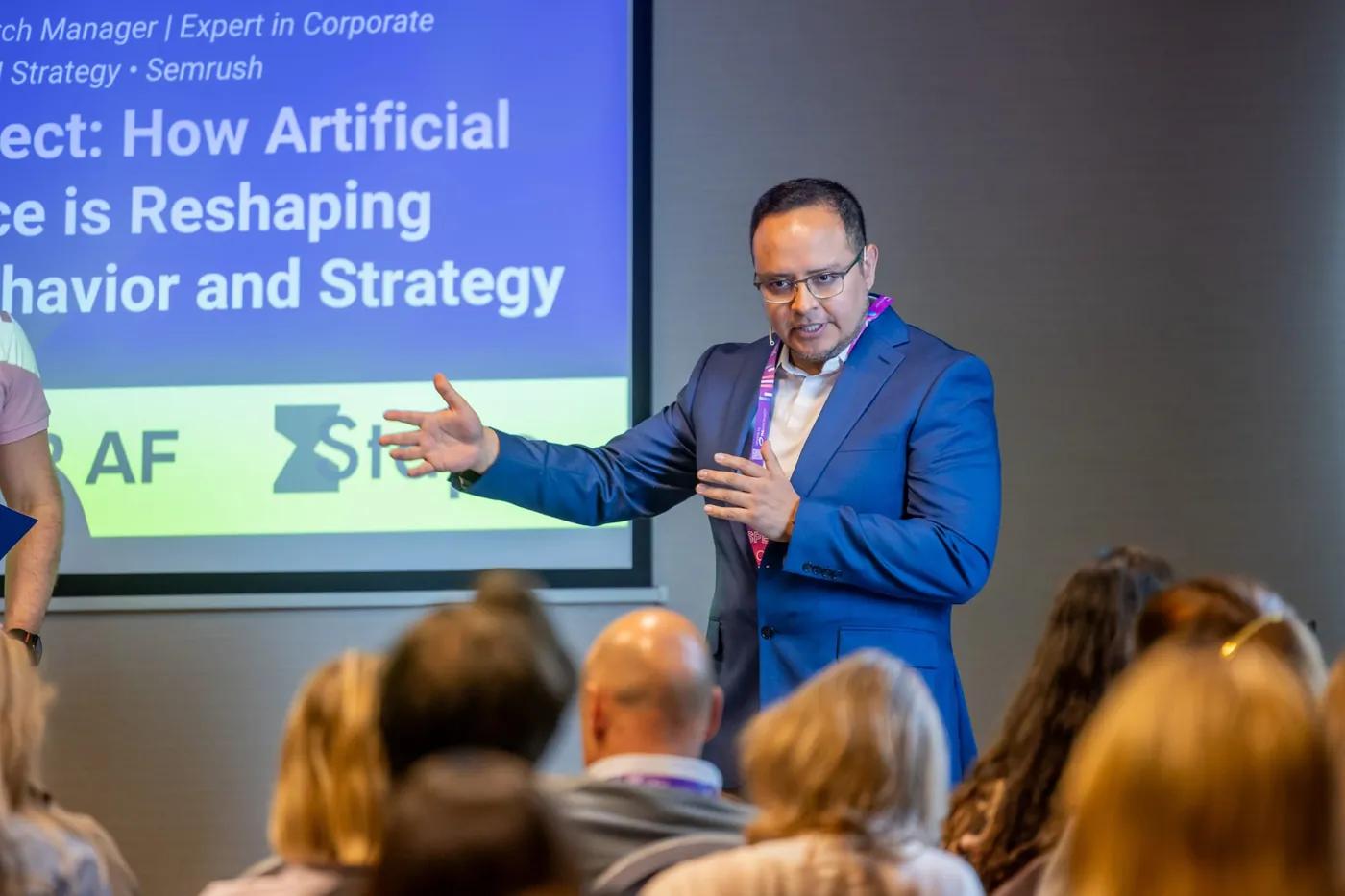
Quick answer:Choose the format before the name. Define the audience decision, compare each proposal against the same seven criteria, and agree what happens before, during, and after the session. For AI search, a useful brief connects current evidence to a decision B2B marketing leaders can defend.
Choose the format before the speaker
An AI search keynote is a plenary session that examines how AI-mediated discovery can affect brand visibility, citation, buyer consideration, and marketing decisions. It should translate evidence about systems such as ChatGPT and Google AI experiences into a clear management question. It is narrower than a general AI talk and less implementation-heavy than a technical SEO session.
- AI search keynote: for marketing leaders deciding how discovery, measurement, content, and brand evidence should change.
- General AI keynote: for a cross-functional audience that needs broad implications, adoption questions, or a shared view of the technology.
- SEO keynote: for practitioners who need channel strategy, search mechanics, or implementation detail.
Use the full keynote format comparison when the committee is still deciding which of these three jobs the session must do. Once the format is clear, review the available speaking topics and formats.
Map the audience to the right kind of session
These profiles are not a league table. They describe different event needs, and more than one may apply to the same program.
B2B marketing leadership
CMOs and VPs need an evidence-led explanation of how AI visibility can affect consideration, reporting, and investment decisions.
Cross-functional executive audience
A leadership team needs common language for AI opportunity, risk, governance, and organizational change.
Search and content practitioners
SEO, content, and demand generation teams need more depth on citations, measurement, workflows, and implementation.
Strategy and future scenarios
An opening or closing plenary needs informed scenarios that distinguish current evidence from assumptions and forecasts.
Define the outcome for a B2B CMO audience
A useful AI search session should help a CMO explain AI visibility to the board, identify where the brand is absent from consideration, and make the next decision about measurement, evidence, or team priorities. The audience does not need another trend recap. It needs a defensible way to decide what the available evidence supports now and what remains uncertain.
Write a reusable organizer brief
Copy this into the call for proposals, agency brief, or preparation email. Give every candidate the same information before comparing responses.
- Audience: roles, seniority, sectors, company stage, and expected room size.
- Decision: the question participants should be better able to answer after the session.
- Baseline: what the audience already knows about AI search, marketing, and SEO.
- Format: plenary, executive briefing, moderated conversation, workshop, or practitioner session.
- Context: event theme, adjacent sessions, market, language, and examples to include or avoid.
- Evidence: the sources, methods, dates, and limits the committee expects to see.
- Delivery: duration, Q&A, recording rights, accessibility, stage setup, and AV backup.
- Follow-through: what the organizer will send or do after the session.
| Review | Ask | Look for |
|---|---|---|
| Evidence | Where does this finding come from? | A source, method, date, and stated limits |
| Questions | How will uncertainty and live questions be handled? | A clear Q&A plan and honest boundaries |
| Clarity | How does this example support the decision? | A clear connection between evidence and implication |
| Updating | What has changed in the material? | Dated examples and corrections where needed |
| Audience | What will be adapted to this brief? | Changes appropriate to the room and its decision |
| Delivery | What happens if projection or connectivity fails? | An agreed, accessible backup format |
| Scope | What will the session not cover? | Clear limits, dependencies, and alternatives |
1. Where does the evidence come from?
Ask the speaker to explain one finding, the source, and its limits. For original research, ask about their role, the sample, and the method. For an external study, ask why it is relevant and whether the interpretation stays within what the study measured. Accurate synthesis can be valuable when its sources are clear.
A useful question is: “Which finding will shape this talk, and what does it leave unanswered?” Look for a clear distinction between observation, interpretation, and forecast. A finding does not need to contradict the consensus to help your audience.
2. How will audience questions be handled?
Ask what questions the prepared talk leaves open and how the speaker would respond to a question outside their expertise. An explanation of uncertainty or a commitment to check a source can be more useful than an immediate answer.
Agree whether the session includes audience questions, how they will be collected, and how much time is available. Watch a recording with Q&A where possible to assess how the speaker listens and responds.
3. Do the examples make the argument clear?
Watch a recent recording and follow one example from evidence to implication. Can you explain the point afterwards? Are numbers, dates, and named examples used to clarify the decision?
Counting facts per minute is not a reliable score for a keynote. The right level of detail depends on the audience and format. Check that the explanation is understandable without losing the context behind a claim.
4. What has changed in the material?
Compare recent material and ask which claims or examples have changed. In a fast-moving topic, platform features, model versions, and research dates need attention. A framework may remain useful even when the examples change.
Ask: “What have you revised in this session, and what evidence led to the revision?” Look for corrections and dated sources, while retaining older examples when they still explain the decision accurately.
5. How will the session fit this audience?
Share the audience brief before asking about customization. Discuss which examples, definitions, and sections should change, and what should be left out. The objective is a useful session for the room, not a requirement to rebuild every slide.
Confirm the intended takeaway in plain language: what should participants understand, compare, or prioritize afterwards? Ask how the proposed format and level of detail support that outcome.
6. What is the delivery backup plan?
Discuss projection, sound, timing, accessibility, and a backup format. A data-heavy session may need a different fallback from a moderated conversation. Agree the alternative with the event team before delivery.
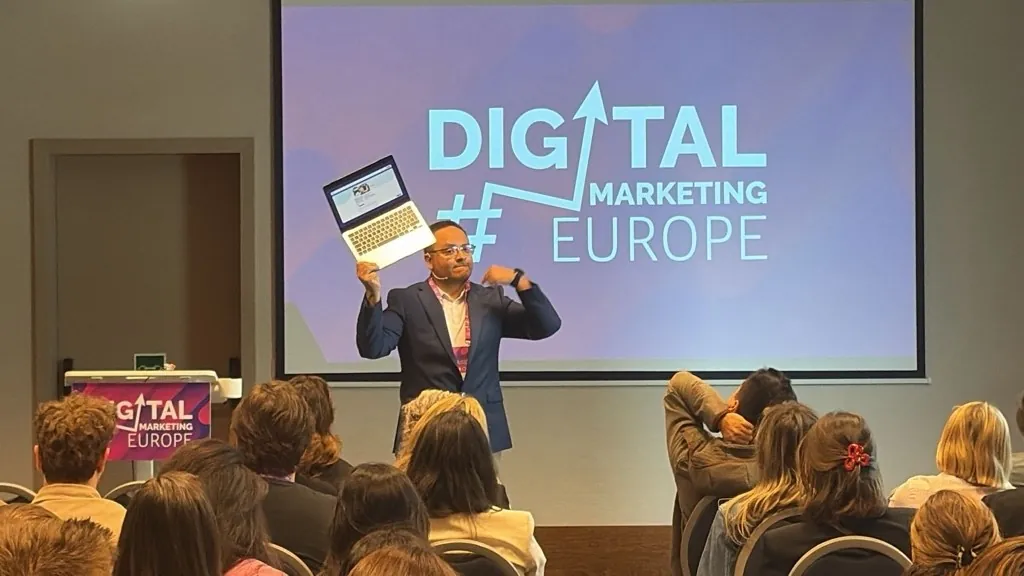
At Digital Marketing Europe in 2026, a projection problem meant I continued using a laptop to show the material. The practical lesson is to prepare a way to continue the session and make sure the event team knows the plan.
7. Where are the limits of the session?
Ask which topics the session covers, which it does not, and what preparation it requires. A speaker may suggest a different format, another specialist, or a narrower brief when that would serve the audience better.
Declining invitations is not a quality metric by itself. What matters is an honest discussion of expertise, time, language, and audience fit before either side commits.
Plan the session before, during, and after the event
Before
Share the organizer brief, review a full recording, agree the audience decision, validate the evidence boundary, and confirm format, timing, accessibility, travel, recording rights, and the AV backup.
During
Introduce the decision the session will help the audience make, protect the agreed Q&A time, and have one event-team owner ready to activate the backup plan.
After
Send the agreed resources, capture unanswered questions, and ask whether participants can explain the decision or framework. Do not treat applause, social posts, or a single testimonial as proof of business impact.
Printable qualitative checklist
Use Clear, Needs discussion, or Not applicable for each criterion, then record the evidence or open question in the notes. This is a qualitative decision record, not a validated score.
These checks support a programming decision. They do not predict audience response or guarantee an outcome.
Frequently Asked Questions
Review a full recording, then ask about the evidence behind one finding, what would change the speaker’s interpretation, and how the session would fit your audience. Agree takeaways, language, preparation, and delivery requirements before confirming.
Look for relevant expertise, traceable evidence, clear explanations, thoughtful answers, and preparation for your audience. Original research and careful synthesis can both support a useful session when the speaker explains the sources and limits.
Speaker cost models vary, so organizers should compare the complete commitment: preparation, custom content, travel, recording rights, and post-event follow-up. Fernando Angulo does not charge a personal speaking fee because Semrush funds his research and stage time. Events are selected on audience fit rather than budget; travel and logistics are discussed after the event is confirmed.
An expert briefing usually focuses on current evidence and practice. A future-oriented session explores scenarios and their implications. Either can be useful if observations, assumptions, and forecasts are labeled and the format fits the audience’s decision.
Review a full recording in Spanish and confirm that the speaker can handle audience questions in the same language. Discuss local examples, terminology, and any interpretation requirements. Fernando delivers sessions in English and Spanish.
Start once the event date, audience, and session purpose are defined. Ask about availability and the preparation time needed for your brief. Custom research, travel, and recording arrangements can affect the schedule; agree these directly with the speaker.
Ready to discuss audience fit?
Funded, not free. As Senior Market Research Manager at Semrush, an Adobe company, my research and stage time are funded by Semrush, so there is no personal speaking fee to your event. I select invitations on audience fit, not budget. Travel and logistics are discussed after an event is confirmed.